Blog
What Happens When You Start Questioning the Faith You Once Took for Granted?


Questioning your faith can be frightening.
Especially when your faith has been part of your identity for years.
For many people, Christianity is not simply a collection of beliefs. It is connected to family, friendships, community, childhood memories, and relationships with people they trust.
So when a question comes along that challenges one of those beliefs, the question can feel much bigger than theology.
It can feel personal.
What happens when you discover that something you were taught may not be as clear in Scripture as you once believed?
The first reaction may be resistance.
You might tell yourself that you are overthinking things. You might search for someone who can give you the answer you want. You might avoid the passage altogether.
That is a natural response.
We tend to protect beliefs that have given our lives structure and meaning.
But eventually, some questions refuse to disappear.
They keep coming back.
For Keith H. McIntosh, questioning came after years of preaching and teaching the Bible. He had spent years sharing teachings he believed were true. Then personal experiences and further examination caused him to reconsider what he had accepted.
That kind of experience can change the way a person approaches Scripture.
Instead of asking, “What does my church teach about this?” you begin asking, “What does the Bible actually say?”
Those are not always the same question.
The difference can be significant.
Religious organizations have traditions. They develop doctrines, interpretations, customs, and systems of belief. Some may be deeply rooted in Scripture. Others may be based on interpretations that have simply been repeated over time.
Once a belief becomes part of a religious system, challenging it can feel almost impossible.
But Scripture should never become something we are afraid to examine.
There is also a misconception that changing your understanding means you have failed.
It doesn’t.
Learning often requires changing your mind.
Think about any subject you have studied seriously. Your understanding develops as you encounter new information. You correct mistakes. You reconsider assumptions. You become more careful about what you accept as fact.
Why should examining faith be different?
The important thing is how you approach the process.
Questioning does not have to mean mocking Christianity. It does not have to mean rejecting God. And it does not have to mean accepting every alternative interpretation you encounter.
It can simply mean slowing down.
Read the passage.
Read the verses before and after it.
Compare what the text says with what you were told it says.
Then think.
That process may lead you somewhere unexpected.
For some people, it strengthens their existing beliefs. For others, it changes them completely. For still others, it creates a more complicated understanding of faith.
There is no shortcut.
Honest questions sometimes lead to uncomfortable answers.
But there is value in knowing that your beliefs have been examined rather than inherited without question.
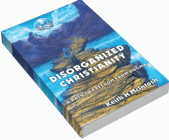
That is one of the ideas behind Disorganized Christianity.
The book challenges readers to reconsider teachings they may have accepted for years and to approach Scripture from a different perspective.
You do not have to agree with every conclusion.
You simply have to be willing to look.
Because sometimes the hardest part of questioning your faith is not finding an answer.
It is giving yourself permission to ask the question in the first place.