Blog
Can You Read the Bible Without the Filter of Organized Religion?


Imagine opening the Bible without anyone telling you what you are supposed to see.
No sermon notes.
No denominational explanation.
No familiar interpretation waiting in the background.
Just the text.
What would you notice?
For many people, that is harder than it sounds.
We rarely approach Scripture completely on our own. By the time we begin reading, we may already have years of teaching behind us. We know the stories. We know the common interpretations. We know which passages are usually emphasized and which ones receive little attention.
In other words, we often read the Bible through a filter.
That filter may come from our church, family, denomination, culture, or previous teachers.
There is nothing unusual about that. Every reader brings some kind of perspective to a text.
The question is whether we are willing to recognize that perspective.
Organized religion can provide community, structure, teaching, and a place for people to practice their faith. But religious institutions are also made up of people. And people can misunderstand Scripture.
That should not be controversial.
The Bible itself contains disagreements, debates, warnings about false teachers, and repeated challenges to religious leaders.
So why assume that every established interpretation must be correct?
Sometimes the strongest beliefs are the ones we have never personally investigated.
Take a familiar Bible story. Most people can probably explain what happened and what it means. But ask them to show exactly where every part of that explanation appears in Scripture, and the answer may become less certain.
There is a difference between what the Bible says and what we have been taught the Bible says.
That difference is at the heart of meaningful biblical study.
It requires patience.
It requires curiosity.
And sometimes, it requires courage.
Because reading Scripture independently can produce uncomfortable discoveries.
You may find that a familiar belief depends on an assumption that is not directly stated in the text. You may discover that a popular interpretation overlooks another passage. Or you may encounter something that challenges an idea you have defended for years.
That can be unsettling.
But discomfort is not necessarily a sign that you are doing something wrong.
Sometimes discomfort is simply what happens when an old assumption meets a new question.
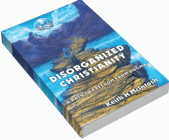
Keith H. McIntosh’s Disorganized Christianity takes this approach to a number of familiar Christian teachings. Rather than simply accepting established explanations, the book asks readers to examine the biblical passages themselves and consider whether traditional interpretations hold up.
Some of the subjects explored are difficult.
Others may seem surprising.
And some may challenge beliefs that many Christians have never thought to question.
The purpose is not to tell every reader what conclusion to reach.
It is to encourage examination.
If your beliefs are true, honest examination should not destroy them.
And if a belief cannot withstand honest examination, perhaps it deserves to be reconsidered.
Reading Scripture with a new set of eyes and a different heart does not guarantee simple answers. In fact, it may create more questions than answers.
But perhaps that is not a bad thing.
A question can open a door.
It can make you study a passage more carefully. It can encourage you to investigate history, context, language, and interpretation. It can move you from simply repeating what you have heard to actually thinking about what you believe.
Sometimes faith becomes stronger through certainty.
Sometimes it becomes more honest through questioning.
Either way, the journey begins with the willingness to open the book and look for yourself.