Blog
When Tradition Becomes Truth: Are We Reading the Bible or Following What We Were Taught?


Most of us learn what to believe before we ever learn to question it.
We grow up hearing certain Bible stories. We hear familiar explanations from pastors, parents, teachers, and church leaders. Over time, those explanations can become so familiar that we stop separating Scripture from tradition.
That raises an important question.
How much of what Christians believe actually comes from the Bible, and how much comes from what someone else told us the Bible means?
There is a difference between reading Scripture and accepting an interpretation of Scripture.
For many Christians, that distinction is easy to overlook. A teaching may have been repeated for generations. It may appear in sermons, books, songs, and Sunday school lessons. Because it is familiar, it can feel unquestionably true.
But familiarity does not automatically make something biblical.
This does not mean every Christian teaching is wrong. It means every teaching deserves examination.
The Bible itself contains examples of people questioning commonly accepted ideas. Jesus frequently challenged religious leaders who placed tradition above what God had actually commanded. He questioned interpretations, exposed contradictions, and encouraged people to look deeper.
That should make us pause.
If questioning religious teachings was acceptable in biblical times, why should asking honest questions today be considered a threat to faith?
Sometimes the fear of questioning comes from the belief that doubt is the opposite of faith. But asking a question does not necessarily mean abandoning God. Sometimes it means taking your faith seriously enough to investigate what you have been taught.
Consider how easily assumptions can become doctrine.
Perhaps you were taught a particular explanation of salvation. Maybe you were given a specific understanding of sin, the Sabbath, the Garden of Eden, Jesus, or the end times. You may have never personally examined the passages behind those teachings.
Instead, you trusted the person explaining them.
That is understandable. We all rely on others to learn.
The problem begins when we stop investigating for ourselves.
Reading the Bible with a new set of eyes and a different heart. can be uncomfortable. You may discover passages that do not fit neatly into the beliefs you have always held. You may encounter questions without immediate answers. You may even find yourself reconsidering ideas you once considered untouchable.
That process can be difficult.
It can also be liberating.
The goal should not be to replace one set of unquestioned beliefs with another. The goal is to develop the courage to examine Scripture honestly.
Ask where a teaching came from.
Ask what the actual passage says.
Ask what the surrounding verses say.
Ask whether the interpretation depends more on tradition than Scripture.
Most importantly, allow yourself to ask questions without assuming that questions themselves are wrong.
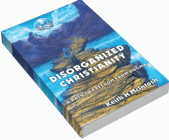
Disorganized Christianity was written from that kind of questioning. Keith H. McIntosh’s journey from preaching to reexamining what he had been taught forms the foundation of his message.
You may agree with his conclusions.
You may disagree with them.
Either way, the questions are worth considering.
Because sometimes discovering what you believe begins with discovering why you believe it.